- Aug 14
What If the Reaction Isn’t Who You Are?
- Dee Kinsey
- 0 comments
By Dee Kinsey & Susan Blue

People come to us carrying stories about themselves that have become so familiar they don’t really question them anymore.
“I’m constantly angry. I don’t know why I can’t just let things go.”
“I’m just high energy. Always have been.”
“I can’t do conflict. I leave.”
“I need to make sure everyone else is okay. That’s just how I am.”
“I’m just not an emotional person.”
Somewhere along the way, something we experience regularly becomes something we believe about ourselves. We stop saying, “This is what happens to me,” and start saying, “This is who I am.”
Then we spend years trying to change who we think we are.
What if we have that backward?
What if some of the things we have decided are personality traits or character flaws are actually nervous system responses that have been repeated long enough to feel like personality?
That distinction matters, because a response is something very different from who you are.
The Nervous System Gets There First
Most of us think something happens, we decide how we feel about it, and then the body responds. Much of the time, it’s actually happening the other way around.
The nervous system is constantly taking in information from around us and inside us. It is doing this without waiting for us to consciously evaluate what is happening.
Someone says something and you feel yourself get hot. A conversation changes and your chest tightens. Someone is disappointed with you and suddenly you’re explaining yourself. You walk into a room and immediately know something is off, even though nobody has said a word.
By the time your mind begins making sense of what happened, your body may already be well into a response.
That response can look like anger. It can look like anxiety, shutting down, leaving, getting really busy, taking control, trying to make someone else happy, or suddenly feeling nothing at all.
Then the mind catches up and gives it a name.
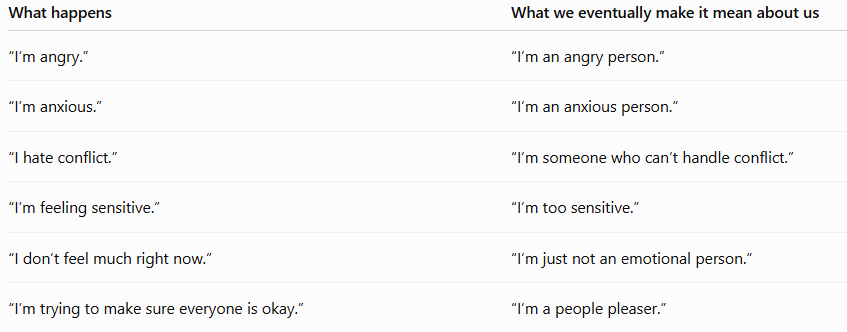
See what happened there? An experience became a description. The description got repeated often enough that eventually it became an identity. But is it?
There’s a Difference Between Character and Response
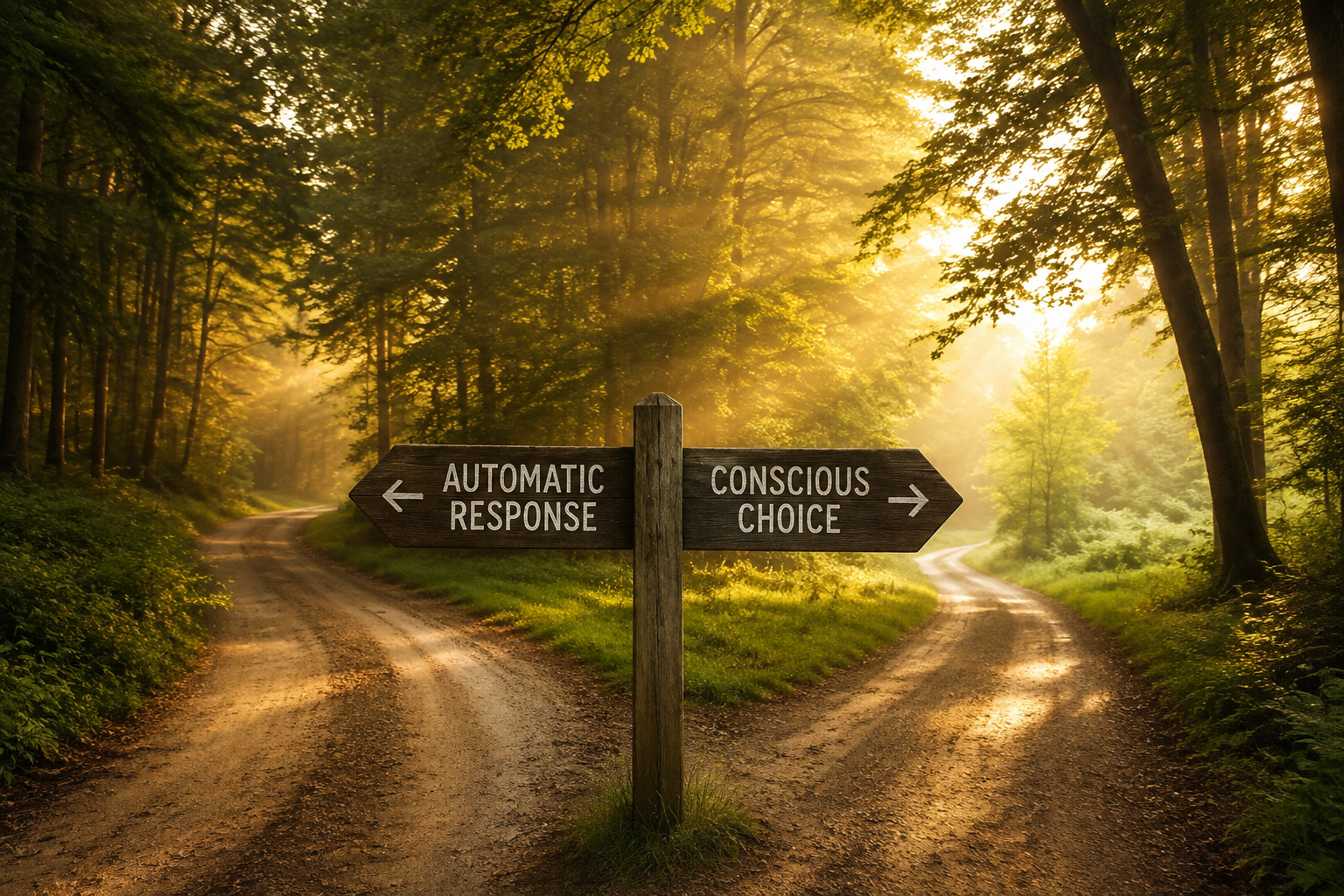
This is where we want to make an important distinction.
Who you are when you have access to choice is not necessarily the same as what your nervous system does when it believes it needs to protect you.
That doesn’t mean we aren’t responsible for our behavior. If I get angry and say something hurtful, understanding that my nervous system was activated doesn’t make the impact disappear. Understanding a response isn’t an excuse for what we do with it.
It does, however, give us a much more useful place to begin.
If I believe anger is simply who I am, then I’m trying to change myself.
If I begin to recognize anger as something my nervous system does under particular conditions, I can get curious about those conditions and about what happens in my body before the anger takes over.
That is a very different conversation.
There Is Intelligence Beneath the Reaction
The nervous system learns through experience. It learns what gets us through something difficult, what helps us maintain connection, what creates distance from something overwhelming, and what allows us to keep functioning.
When something works, the nervous system tends to use it again.
Maybe getting angry gave you enough energy to stand up for yourself when you didn’t otherwise know how.
Maybe staying quiet reduced conflict.
Maybe keeping everyone else happy helped you stay connected to people you depended on.
Maybe being constantly prepared meant you were less likely to be caught off guard.
Maybe staying busy kept you from feeling something you didn’t have the capacity to feel at the time.
Maybe shutting down allowed you to stay in a situation when being fully present for it would have been too much.
None of that requires a conscious decision. You didn’t sit down one day and decide, “From now on, I’m going to become hypervigilant,” or “I think I’ll spend the next thirty years avoiding conflict.”
Your system learned.
And something that helped once can keep happening long after the circumstances have changed.
This is why we say:
There is intelligence beneath the reaction.
We aren’t saying every reaction is helpful. We aren’t saying every behavior is appropriate. We’re saying that instead of starting with “What is wrong with me?” it may be much more useful to ask:
“Why would my nervous system do this?”
There is usually something there worth understanding.
This Is Where Somatic Processing Comes In

When we work somatically, we aren’t trying to talk the nervous system out of its response. We’re interested in what is actually happening in the body while the response is occurring.
Maybe there is heat moving into your face and chest before you get angry. Maybe your breath changes before you realize you’re anxious. Maybe your stomach drops when someone’s tone changes. Maybe you can feel yourself beginning to disappear from a conversation before you actually shut down.
Those are not insignificant details.
That is the response happening.
The practice is learning to notice it without immediately jumping into the story or trying to make it stop.
That might mean staying with the tightness for a moment. Feeling your feet while your chest is activated. Noticing where the breath is moving and where it isn’t. Allowing yourself to recognize the impulse to leave without immediately leaving.
We’re not trying to force the nervous system into calm. We’re creating enough space to be with what is already happening.
That is where something new can begin.
Maybe You’ve Been Trying to Change the Wrong Thing
There may be behaviors you want to change. There may be reactions that are costing you something in your relationships, your health, your work, or simply in the amount of energy it takes to move through your life.
We’re not suggesting otherwise.
But there is a big difference between trying to get rid of something because you believe it proves there is something wrong with you and becoming interested in why your system keeps doing it.
One is a fight with yourself.
The other gives you somewhere to go.
So the next time you hear yourself say, “I’m just this way,” pay attention.
What actually happened right before that?
What did you feel in your body?
What did you want to do?
What changed?
You may find that what you’ve been calling your personality is actually a very familiar response.
And if it is, maybe the question isn’t:
“How do I change who I am?”
Maybe the better question is:
“What has my nervous system been trying to do for me?”
There is intelligence beneath the reaction.
Understanding that intelligence is where we begin.
In our next post, we’ll look at some of the ways the nervous system protects us and how those patterns can show up in ordinary life, often in places we would never think to call a nervous system response.
Susan Blue & Dee Kinsey
The B.L.U.E. Method™ · Somatic Education for Self-Healing
Take the free quiz: 8 Signs Your Nervous System Is Running the Show
Explore the foundational courses: Somatic Education for Self-Healing